Door 1 / Industries
"How do you work with people like me?"
- Who
- Decision makers choosing by the world they work in: a city, a college, a developer.
- Where it leads
- One page per industry, before they read a word about services.
I'm Nicolas. I design websites, build them, and set up the systems that keep a whole network of them running, in-house, start to finish.
From building a web operation to leading a corporate redesign, three projects with one approach: set the standard, then build to it.
View all work
Venue builds and hosting brought in-house. Launches down from 5 to 7 months to about 3.
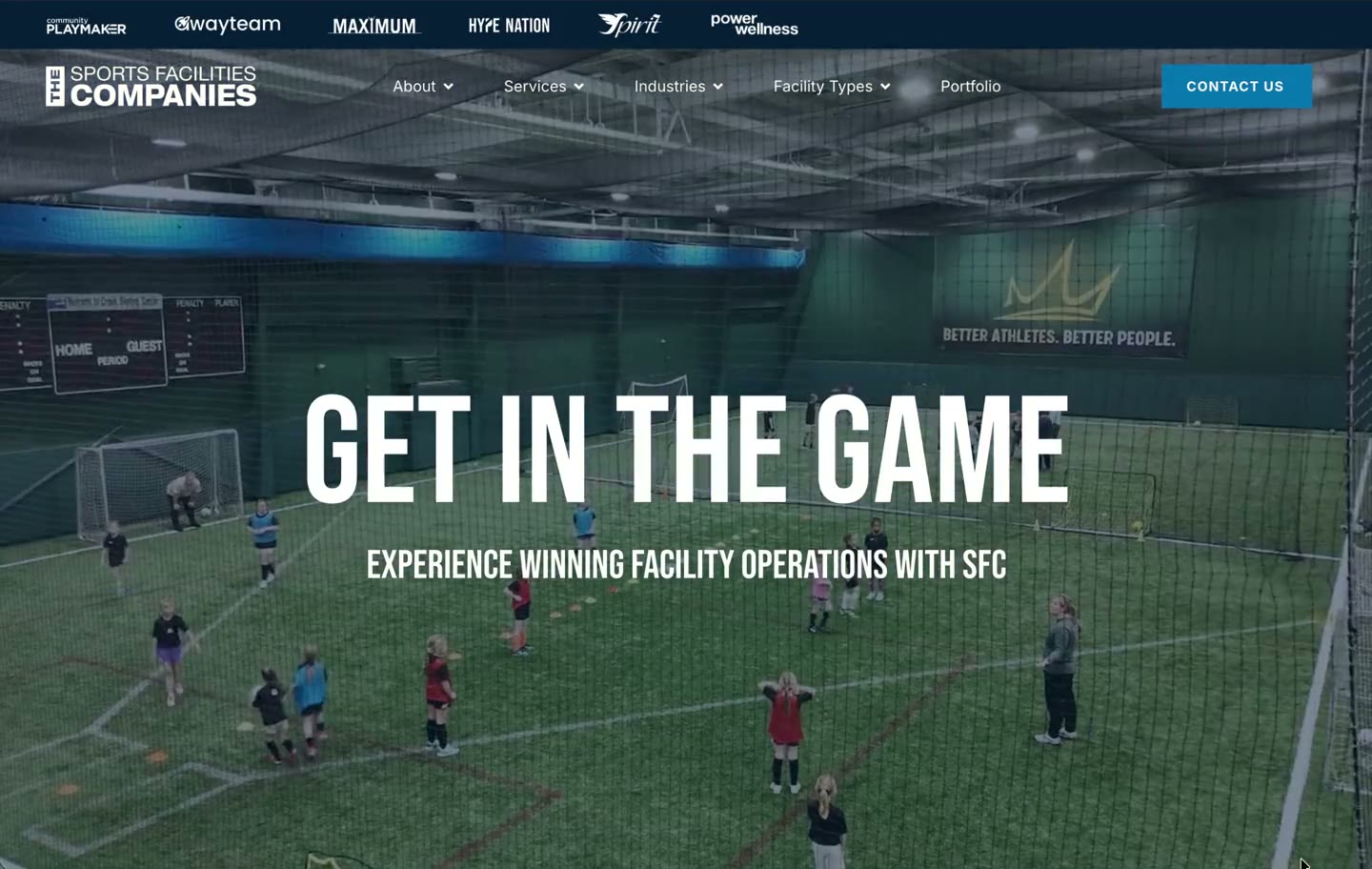
Strategy, navigation and content for the corporate site. Half the pages, 43% more enquiries.
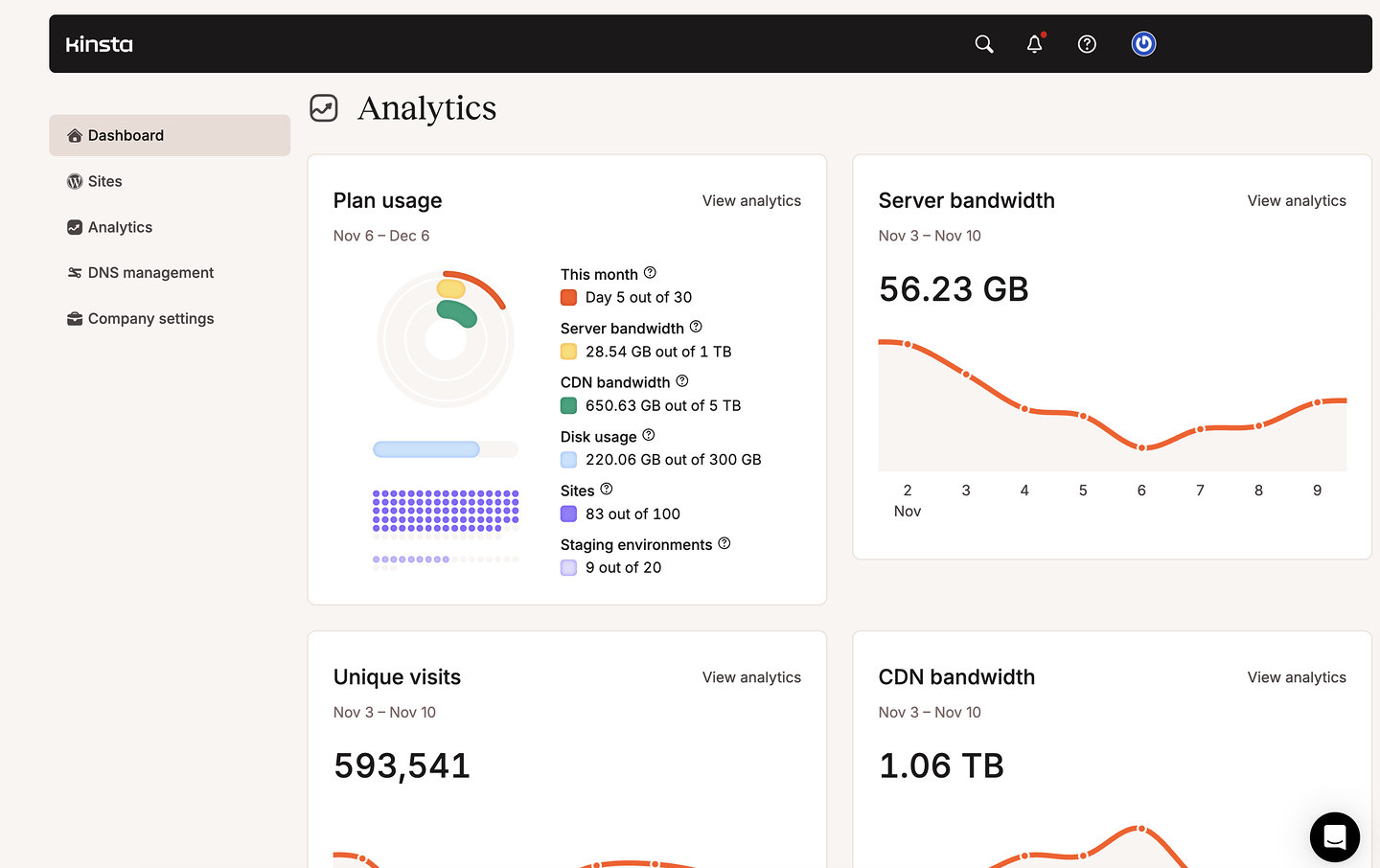
Hosting, security and compliance across 86 domains and 75+ websites.

I lead web at scale: turning complexity into clarity, and strategy into results you can measure. I build teams, improve systems, and get the details right.
Learn more about me01 / Operations
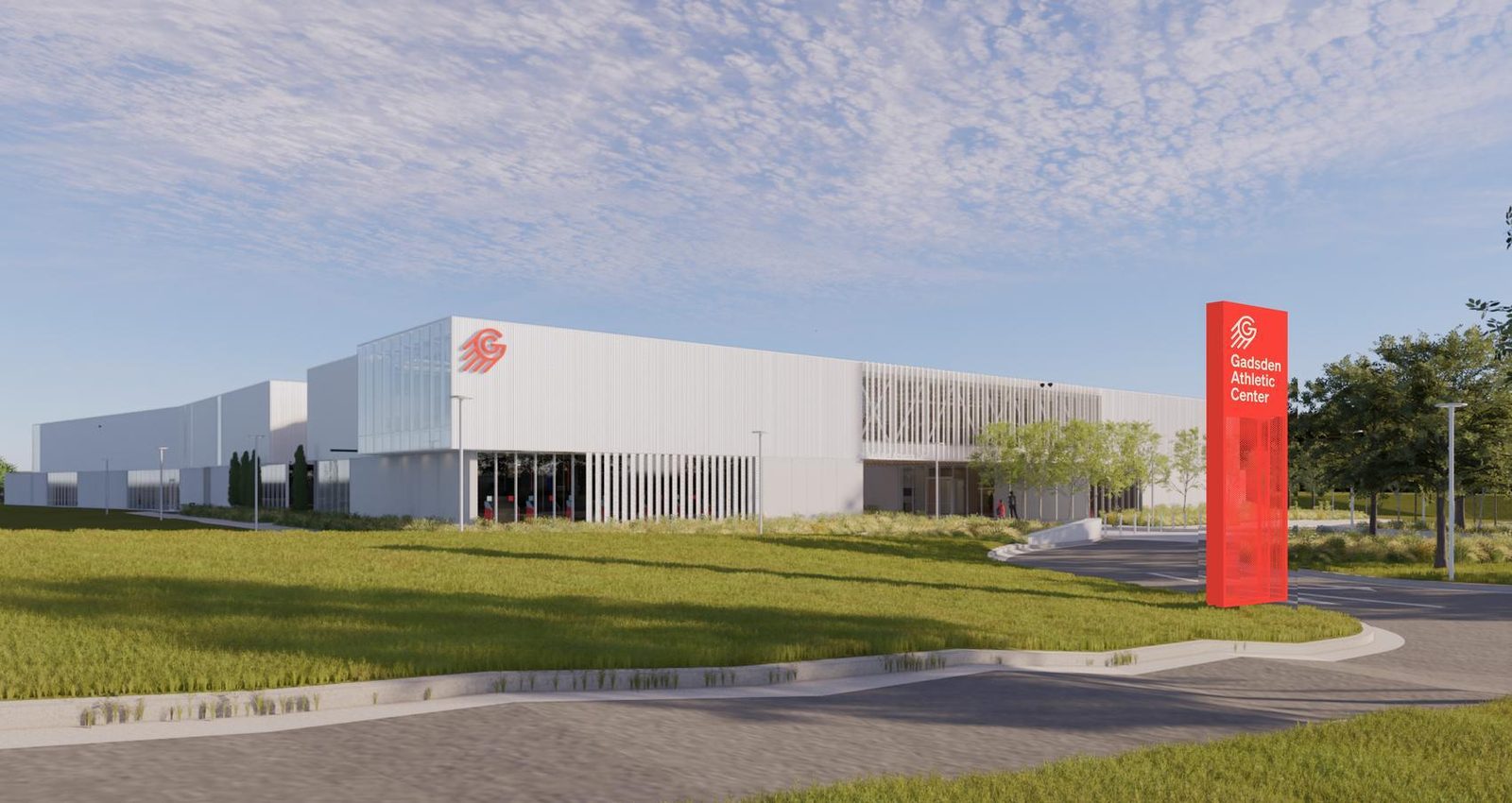
From zero to a scalable, in-house web operation for a network of 75+ venue websites.
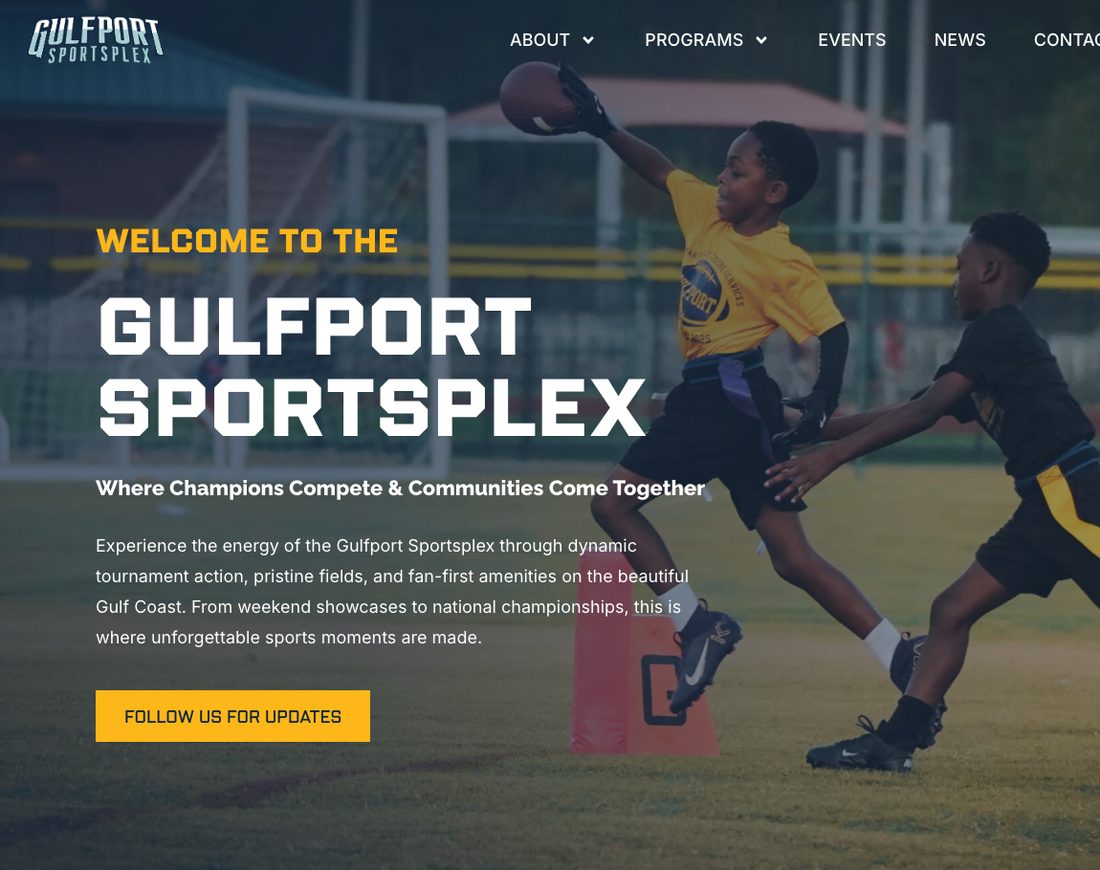
Homepage design, built in-house on one standard.
The challenge
A growing network of venue websites meant more sites, more stakeholders and higher expectations, without the resources to scale the team.
The approach
I designed and implemented the systems, processes and infrastructure to manage 75+ websites across 86 domains, with one standard for every launch.
How it moved in-house
The case, the stack, the standard, and where AI earns its place. Every launch since has followed the same steps.
Showed leadership that building in-house would be faster and cost the venues less. It was, and it did.
One WordPress and Elementor foundation made for sports and recreation venues, so no site starts from zero.
Intake, scoping, QA and ticketing, written down. A small team runs a large network because the steps are the same every time.
Every site starts as a sitemap drafted with AI from the company's own documents, so the plan fits what that venue is for. In QA, AI checks alt text, heading order and schema before a person signs off. Planning and QA, not the builds.
A venue site took 5 to 7 months. Now it takes about 3.
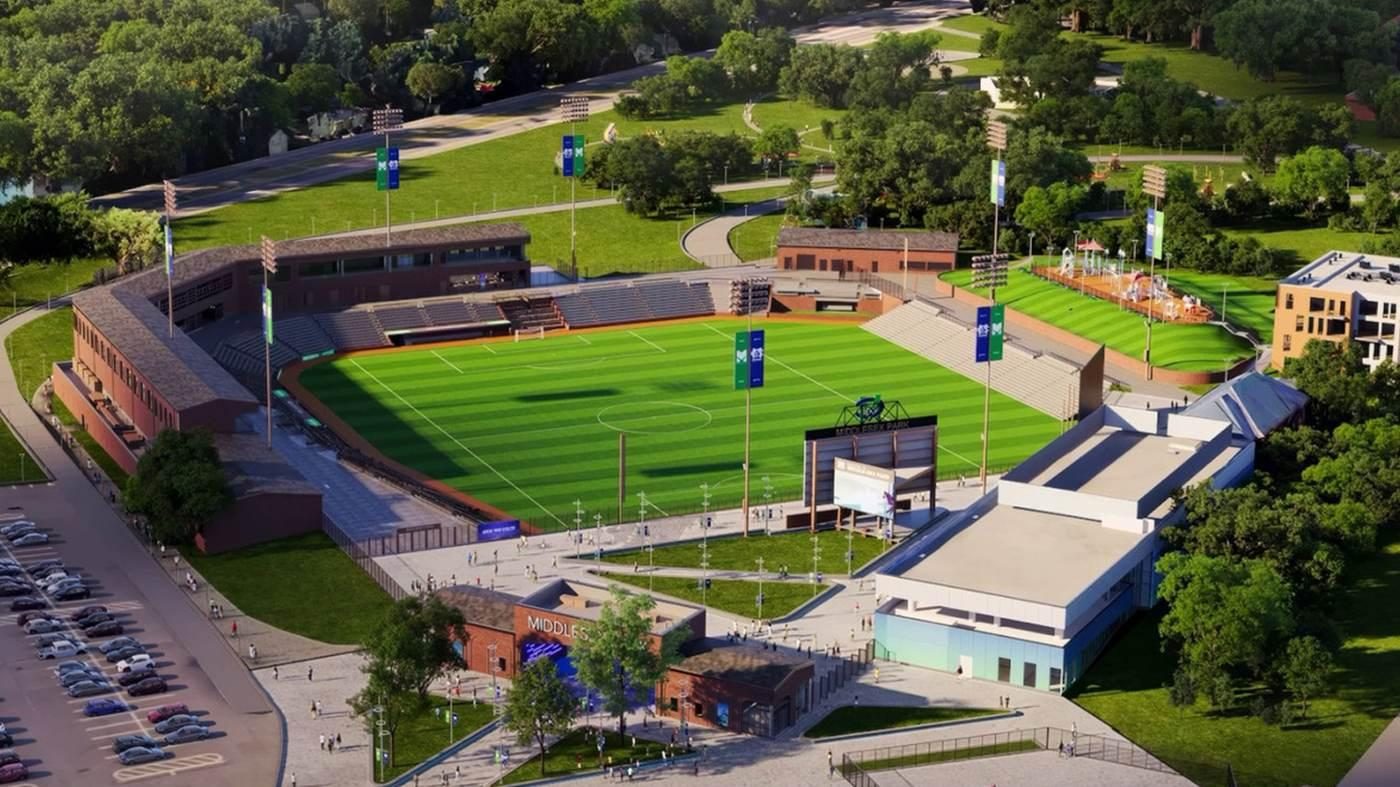
The in-house model gave the business more control, faster delivery and a web function it earns from instead of pays for.
"Most of my job is making the next site faster. The rest is making this one good."
Operating principle
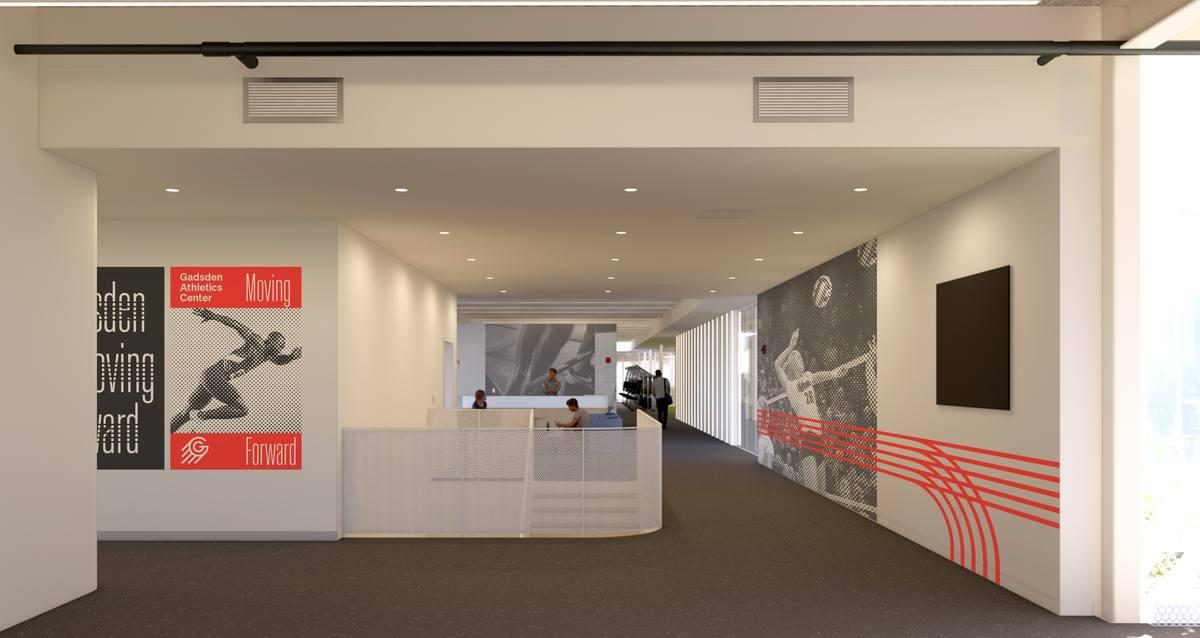
02 / Transformation
One owner, one agency, five groups to sign off. I owned the audit, the navigation, the content and launch day. An agency built it.
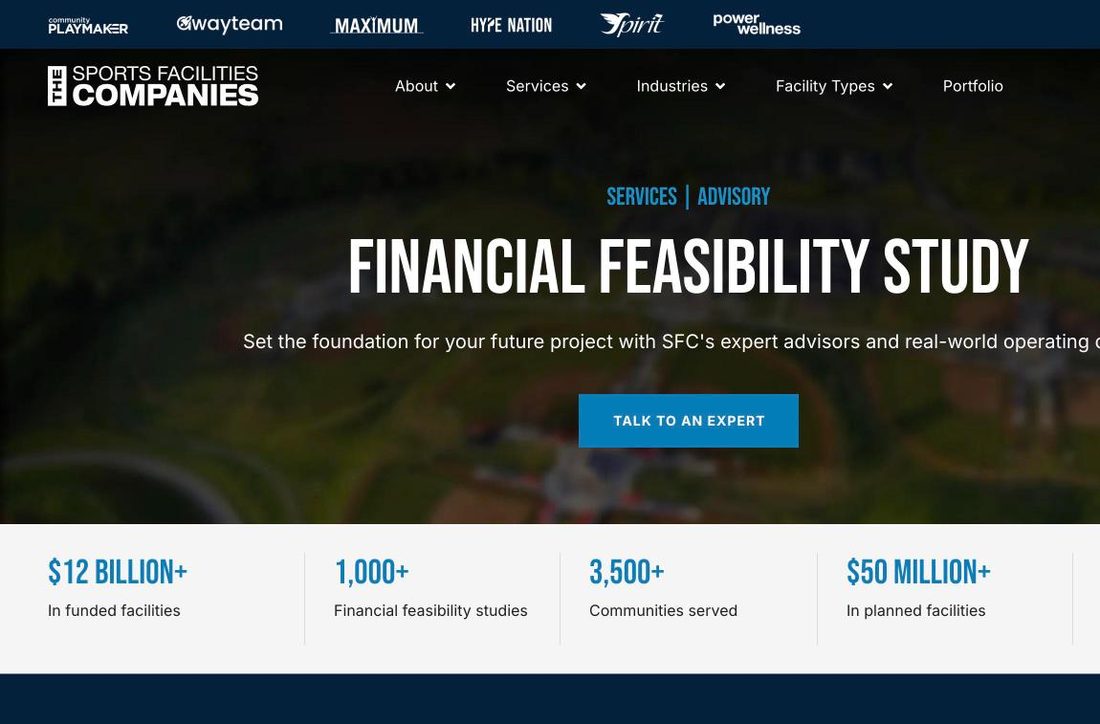
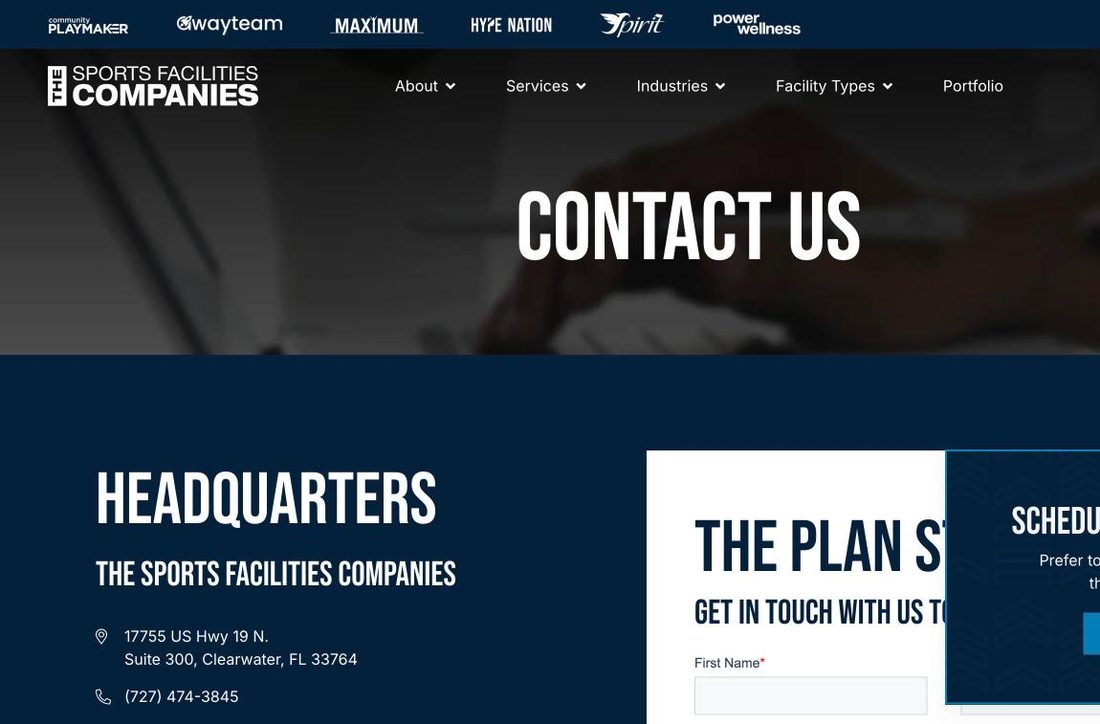
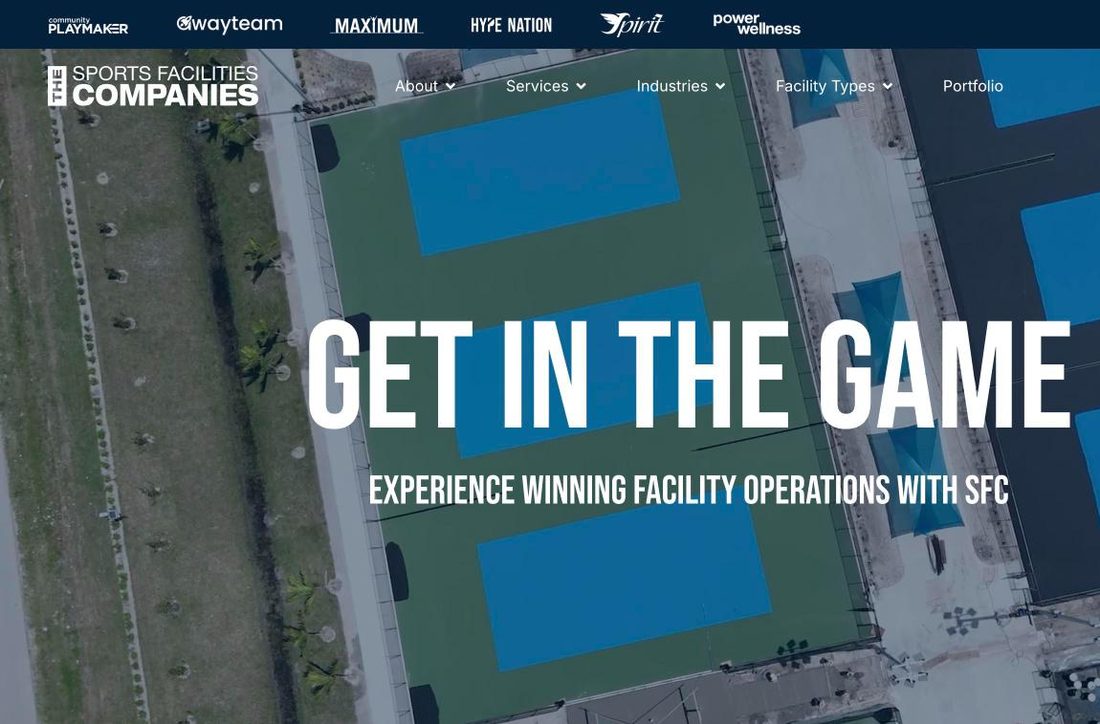
Swipe for the other pages. Screenshots of the live site at launch.
The challenge
116 pages, by different hands, over years. Services no longer sold, the same offer explained twice, and few calls to action where a visitor needed one.
The approach
Audit every page, rebuild the top level around three kinds of visitor, write the content, and take each round to five groups in order.
The impact
You could read the whole site and still not be sure what the company did.
Once by service, once again by type of client.
Rarely where a visitor needed one.
Process
The old site was organised around what the company does, so it explained the same offer twice and left the visitor to work out which version was theirs.
I started from the other end: who lands on this site, and what do they already know when they arrive? Three kinds of visitor, three questions. So the top level got three doors, and each one opens onto a page written for the person who chose it.
Door 1 / Industries
Door 2 / Facilities
Door 3 / Services
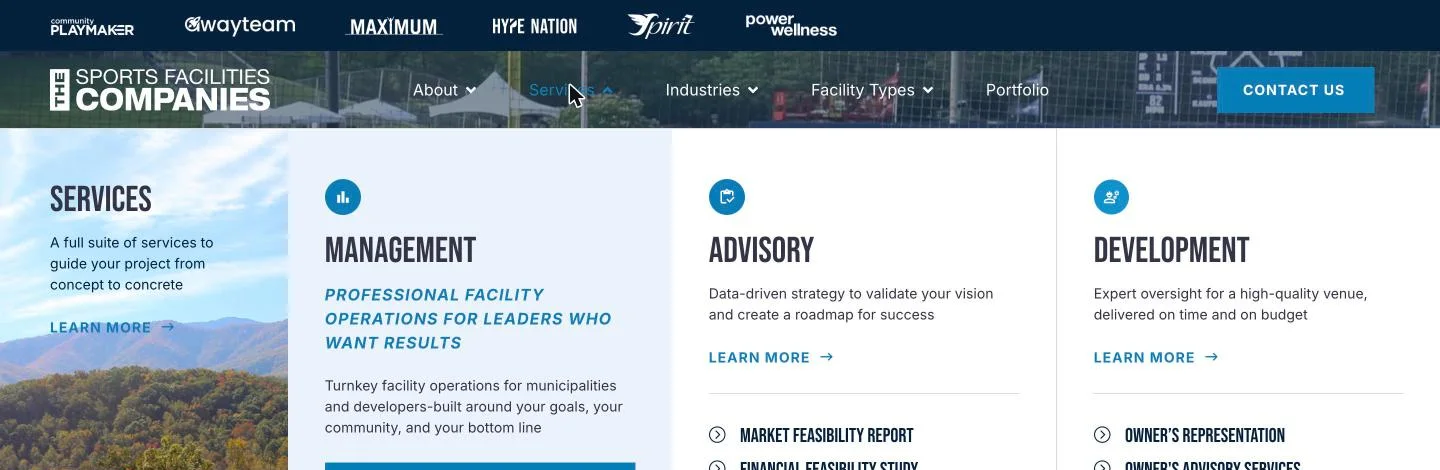
Each thing is explained once, on the page built for it. The old "Clients" section, 21 pages that re-explained the services by type of buyer and drew almost nobody, went entirely. A visitor who knows what they need goes straight to it; one who doesn't gets a page that speaks to their world first, with a call to action where they'd want one.
The agency built it. I owned the plan, the content and the calls, and kept every group aligned until the CEO set a launch date.
More than one round per group. A change asked for in round three never undid something agreed in round one.
The words, page by page.
Assets, brand, copy review.
Does the site sell what they sell?
Review and sign-off.
Final approval and a launch date.
| Old URL | New URL | Action | |
|---|---|---|---|
| /industries/government-services/ | /industries/economic-development/ | Merged | |
| /industries/private-developers/ | /industries/real-estate-development/ | Merged | |
| /clients/financial-institutions/forecast/ | /sf_services/advisory/financial-forecasting-pro-forma/ | Retired | |
| /sf_services/venue-planning/ | /sf_services/development/sports-facility-architect-selection/ | Renamed | |
| /what-is-facility-optimization/ | /sf_services/management/sports-facility-optimization/ | Moved | |
| /11-benefits-of-a-community-recreation-center/ | /blog/11-benefits-of-a-community-recreation-center/ | Moved |
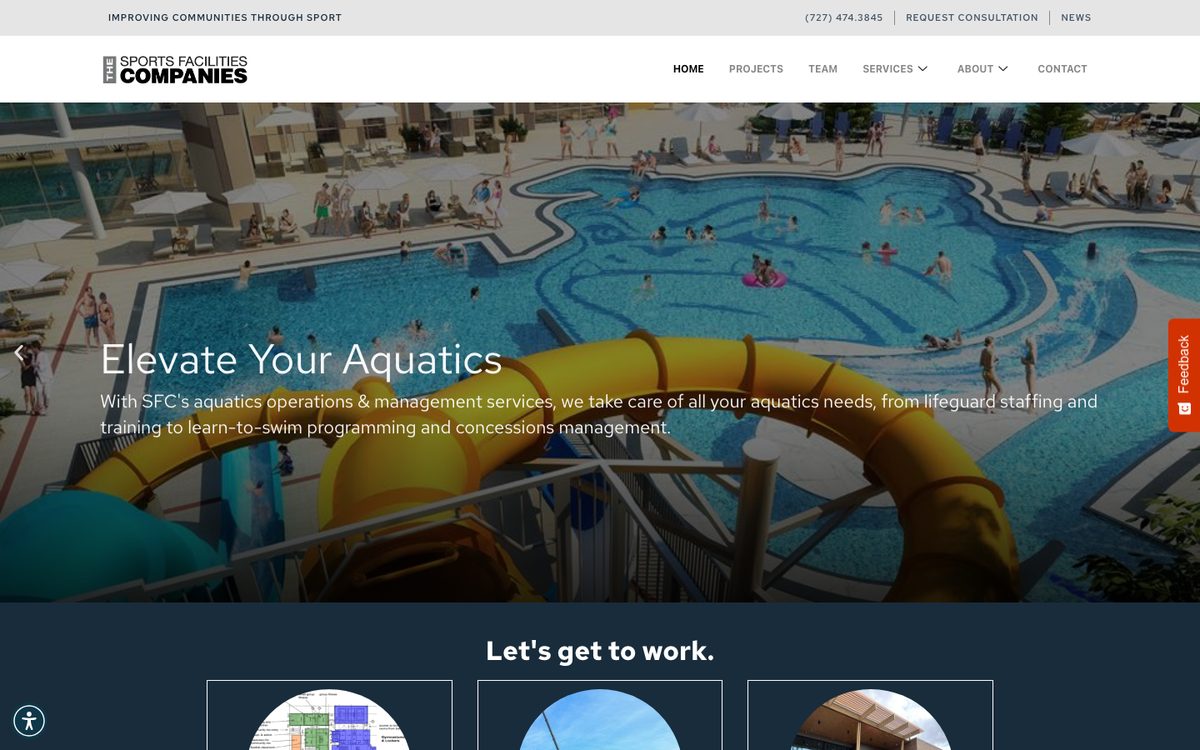
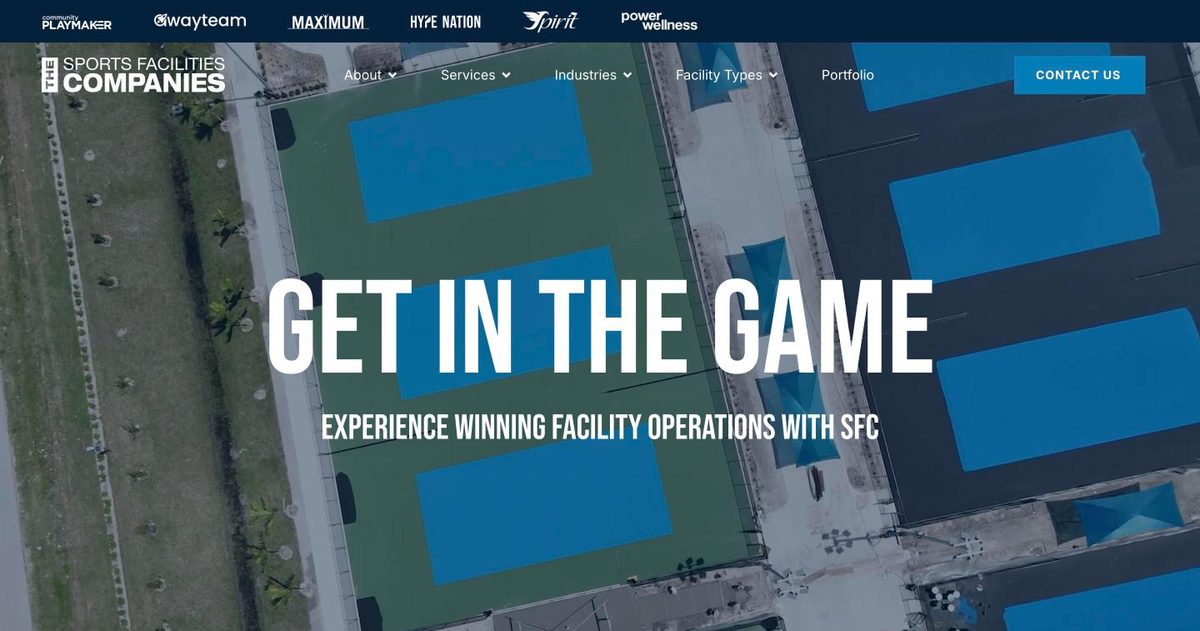
Old and new. The homepage, then a services page with its call to action where a visitor needs it.
The homepage
A services page
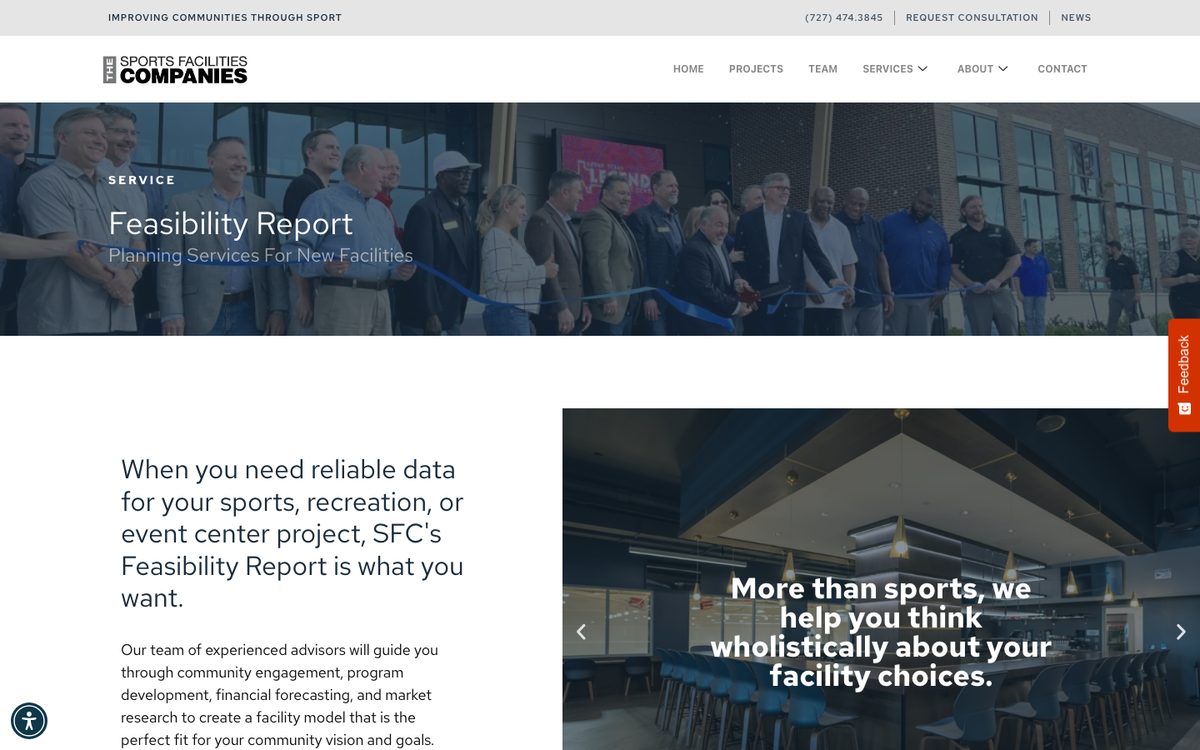
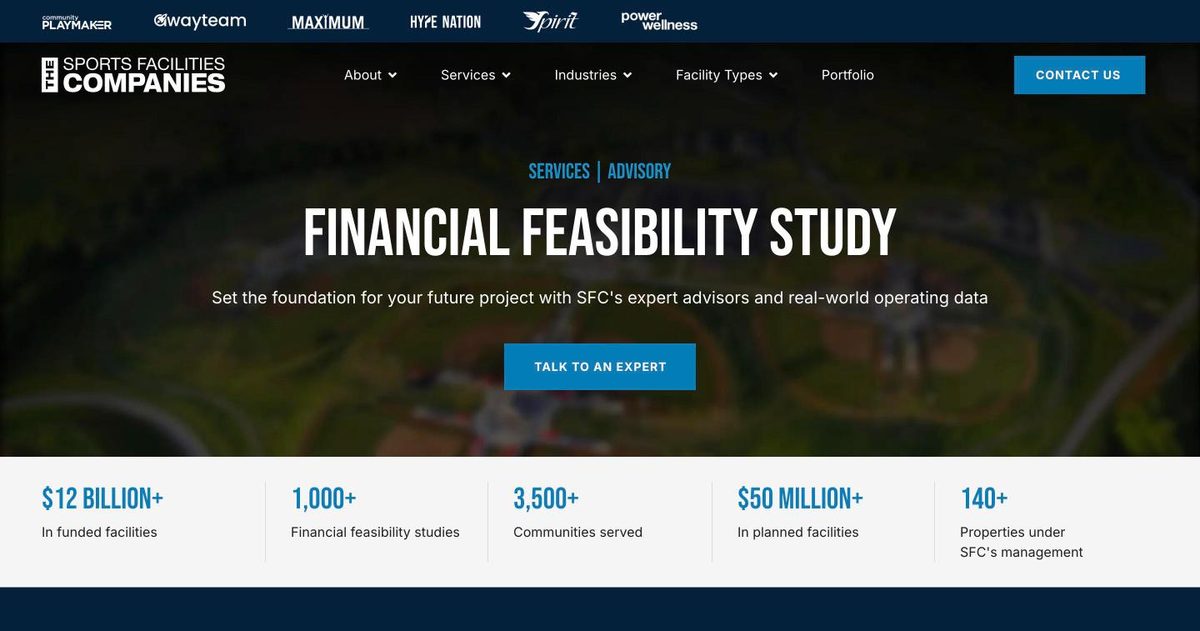
What changed / 06
Enquiries are what the navigation and the calls to action were built to move. A relaunch changes a lot at once, so no single change gets the credit. The number moved all the same.
Visit the live siteNobody argues about the design of a page that no longer exists.
Ask who arrives and what they already know. The doors draw themselves.
Launch day was a checklist, not a scramble.
A corporate site sells what the sales team sells. Without them, it is guessing.
Delegating the build is fine. Delegating the ownership is not.
Nobody sees it on launch day. Everyone depends on it after.
Venue builds and hosting in-house. Launches down from 5 to 7 months to about 3.
View case study
Hosting, security and compliance across 86 domains and 75+ websites.
View case study