More RFI inquiries
+43%
HubSpot form submissions, May to October 2026, against the same six months of 2025.
Case study · Corporate website · sportsfacilities.com
The redesign of the site that speaks for my employer, The Sports Facilities Companies, a sports-venue management firm. I owned it, from the page audit to launch day. An external agency built it.
Employer

Website Manager2024 to present
The problem
You could read the whole site and still not be sure what SFC did.
The four decisions
278 of the 342 old URLs checked were carried over to the new site.
The page earned its place, through visits, links or a job only it did. It came across with its content.
13 old industry pages were merged into 4.
Two or more pages said the same thing. The strongest one took the content, and the others point at it.
64 of the 342 old URLs checked were retired.
The page repeated something said better elsewhere, or almost nobody looked for it. It was removed, and its address now sends visitors to the closest match.
7 pages were moved to a new address.
The content was worth keeping, but its address did not fit the new structure. Same page, new home.
The audit
That meant reviewing all 342 pages on the site, not just the 116 main pages.
Visits were not the only test. Pages with years of links stayed, even with little traffic. The agency's SEO team ran the audit. I made the keep, merge or cut call on every page it flagged.
Navigation
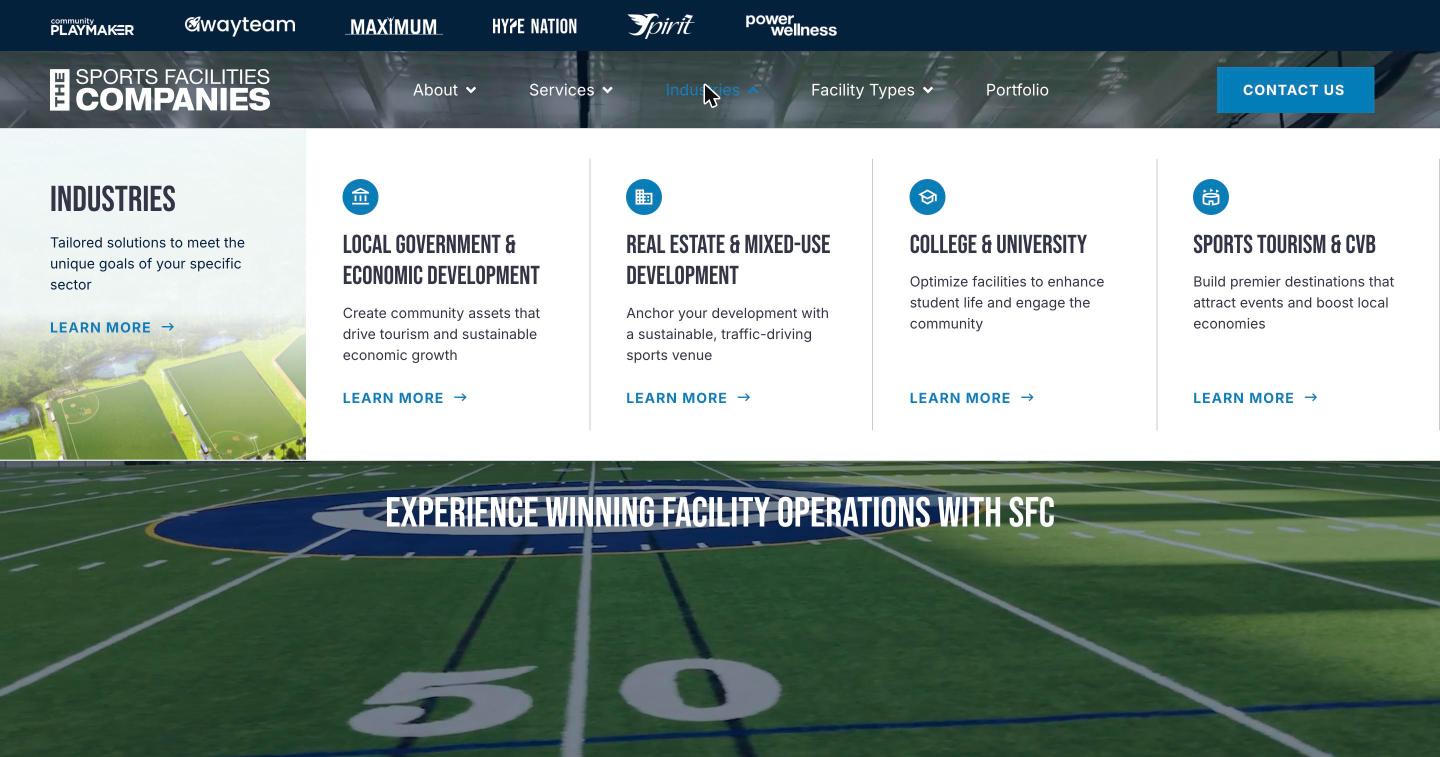
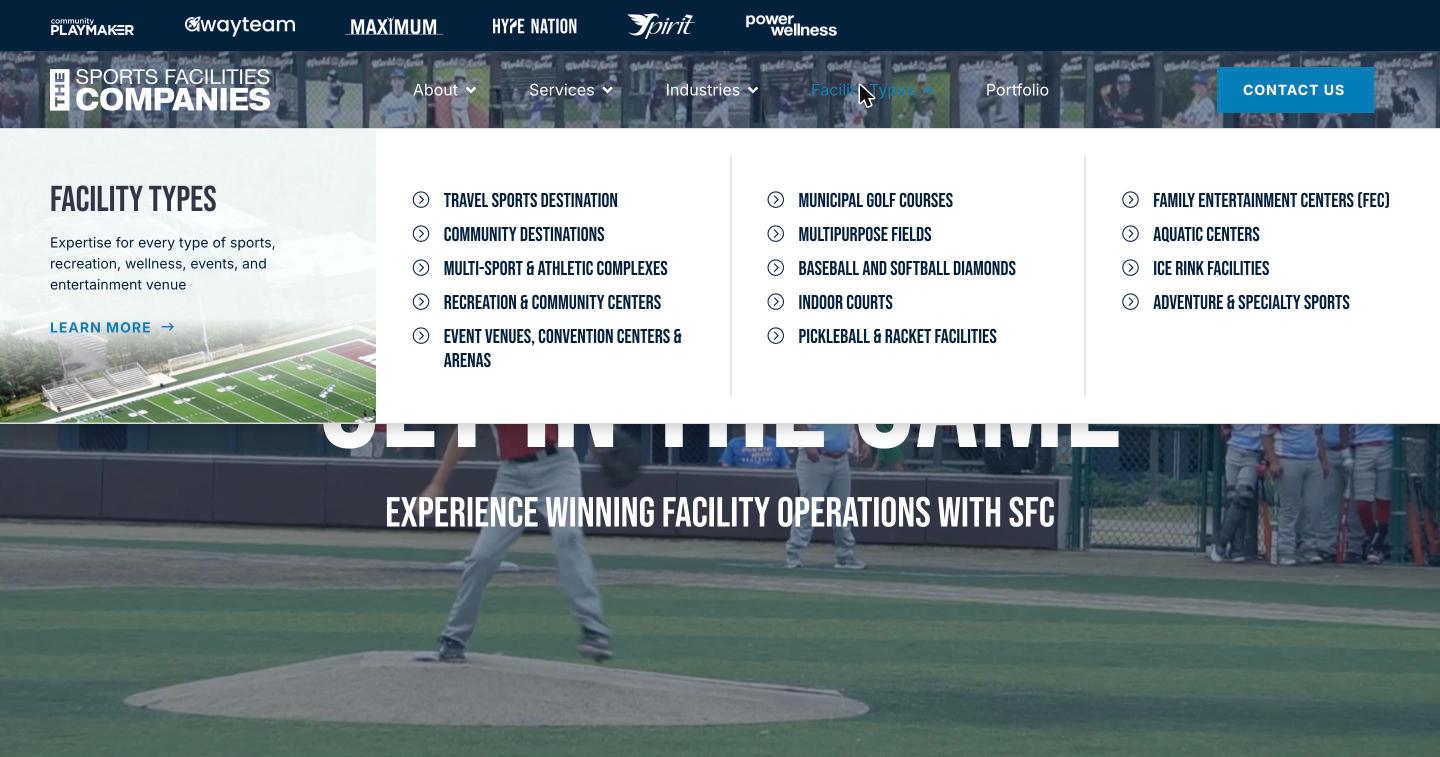
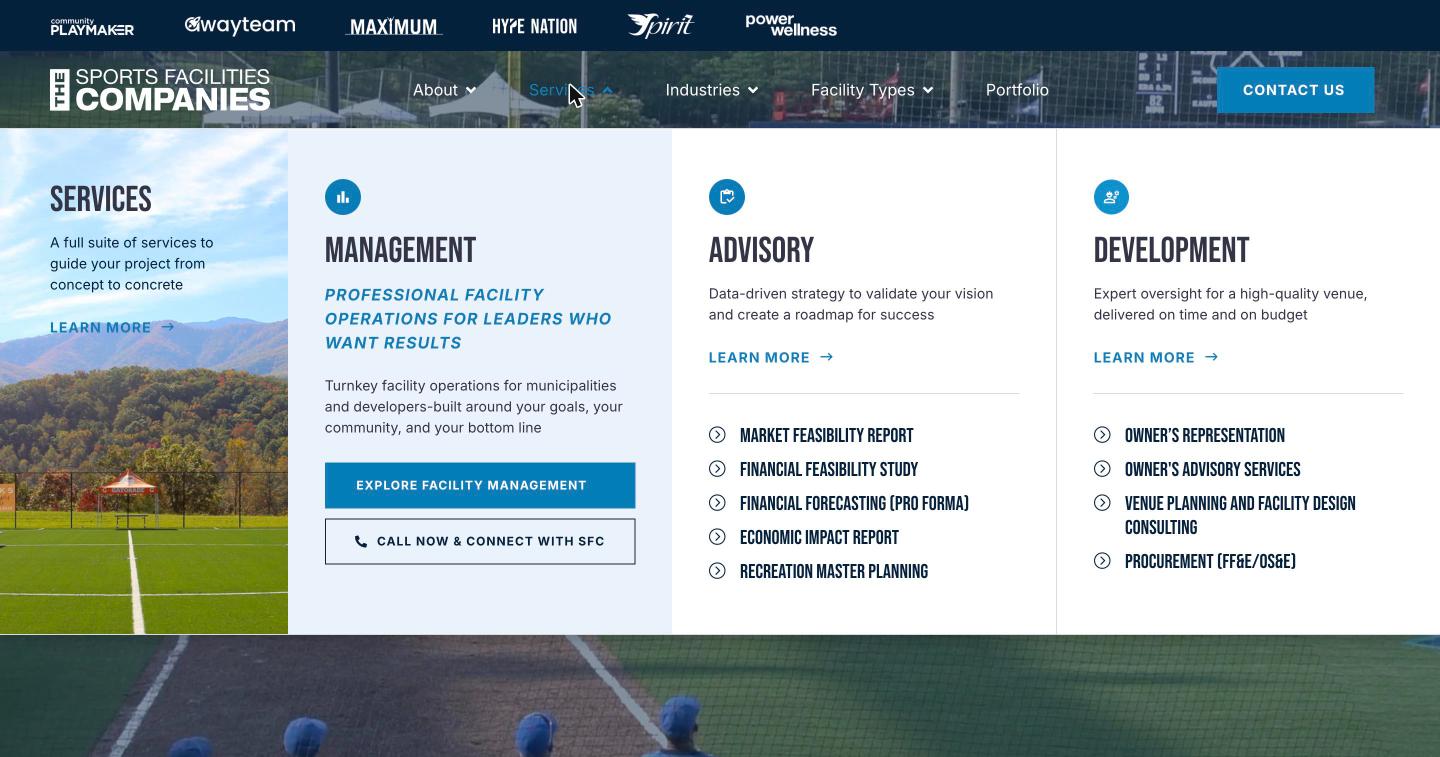
The main menu starts with three choices, one for each kind of visitor. Each topic lives on one page, with a clear next step.
Key decisions
The audit and the menu were the visible work. These three were the risks behind them: each one a problem that could have sunk the launch, what I decided, and what it got. Open one to see how.
ProblemHalf the site's URLs were about to change, plus 862 blog posts, each with its own links and rankings.
DecisionEvery URL that moved got a destination before launch, one row each. The blog moved under one /blog/ address.
ResultEvery old address still lands somewhere useful, and keeps the links it had earned.

ProblemFive groups had five ideas of what the site should say.
DecisionI wrote the new content, steered the design rounds with the agency, then took each round to every group, in order.
ResultOne version of the site, which every group had seen before the CEO did.
Then the next round starts at step 1
ProblemThe site was too big to build alongside the venue website program I was already running.
DecisionI researched agencies and made the call to hire one to design and build it. I kept the plan, the content and the keep, merge or cut call on every page.
ResultThe build got a full team, and every decision still came back to one owner, through to launch in April 2026.
Jul 2025Apr 2026 launch
Before and after
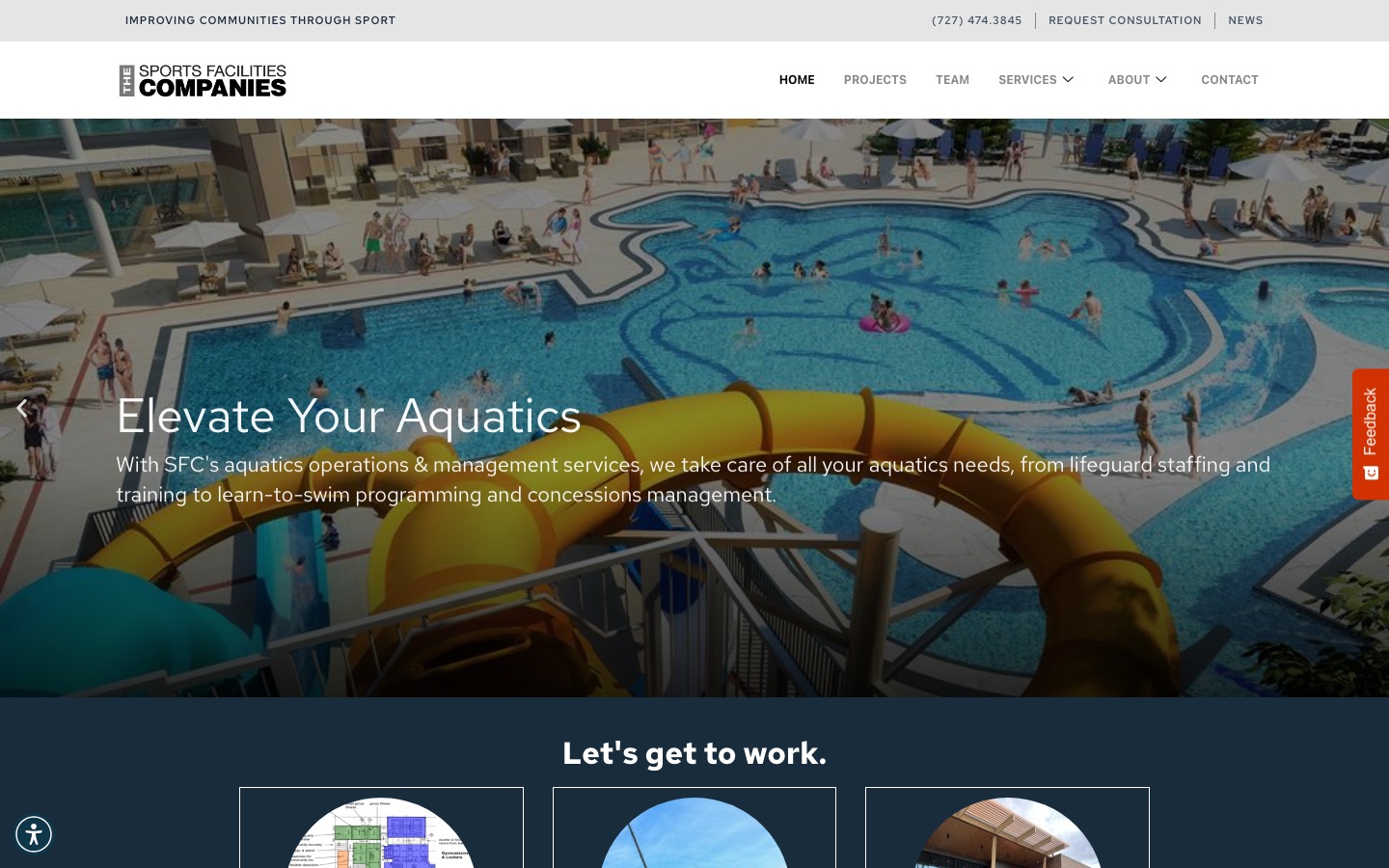
Page by page, old and new
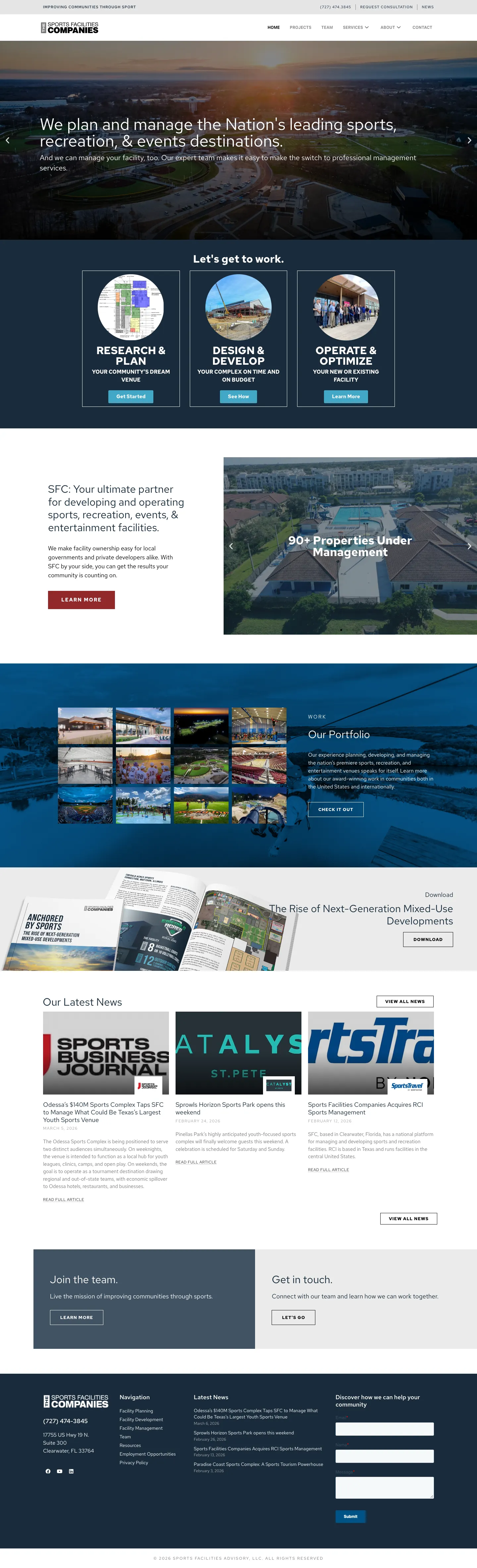

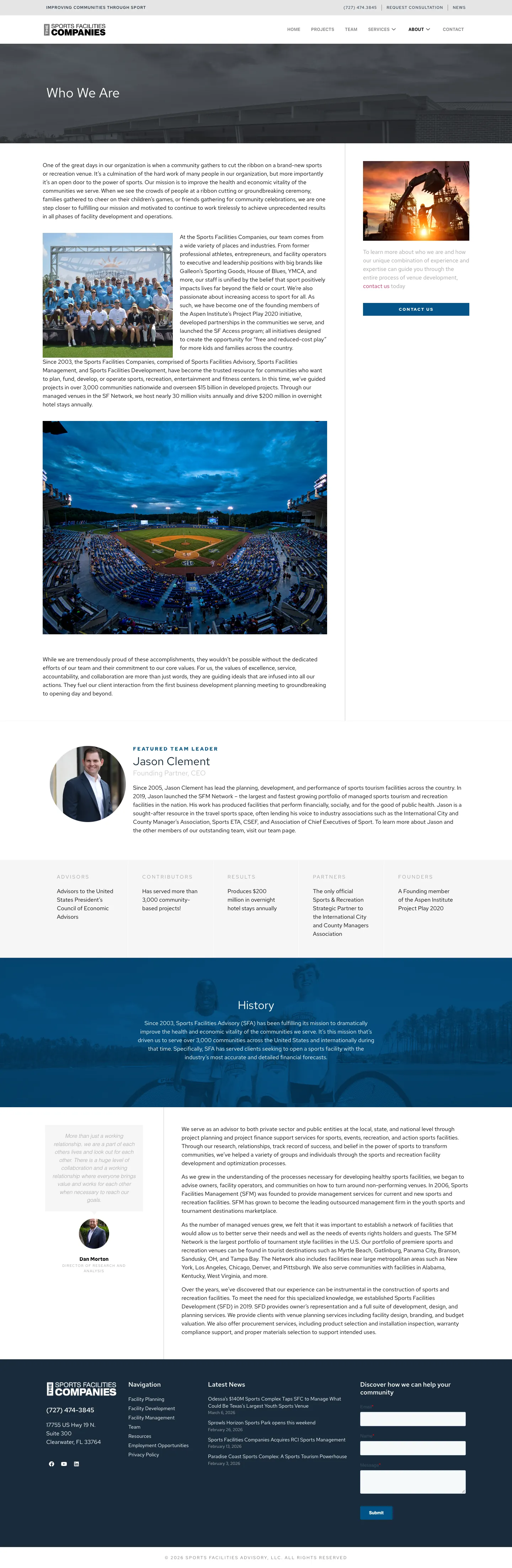

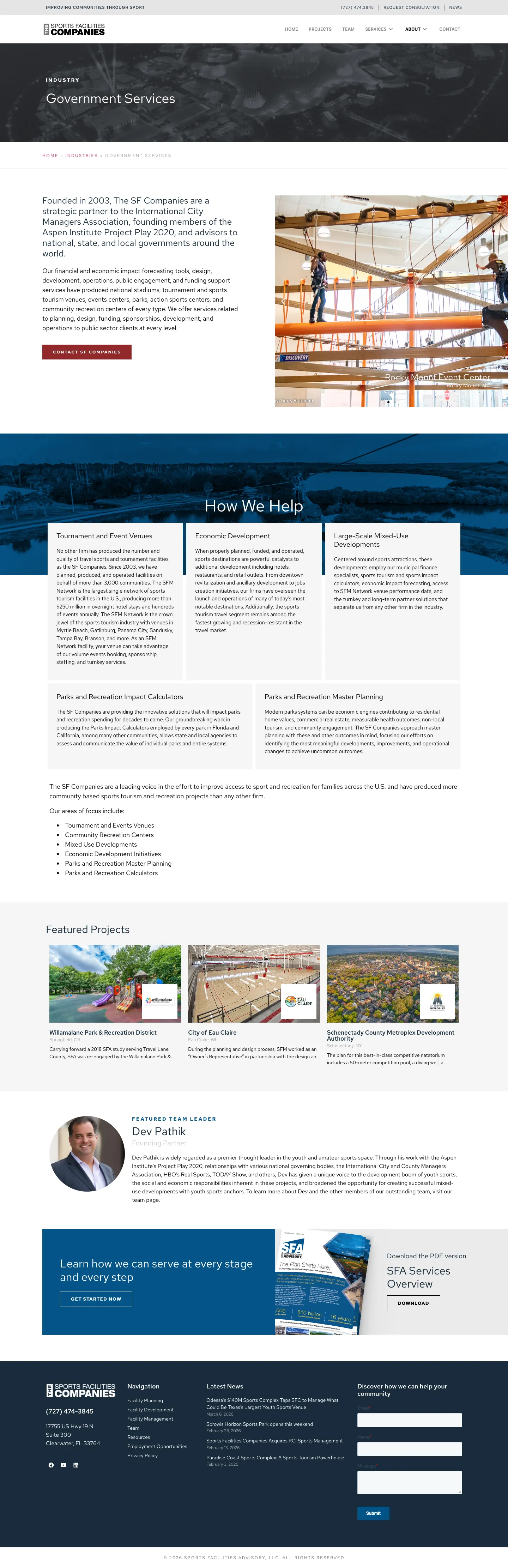

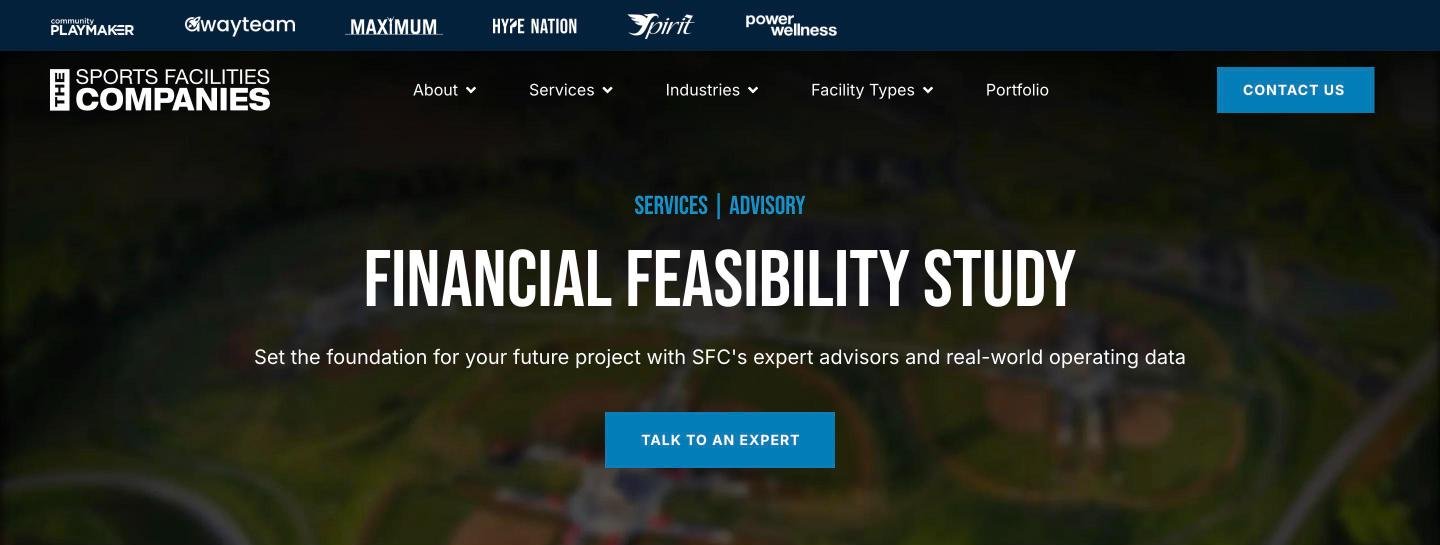
The old homepage opened on a slider and three service cards. The new one leads with a headline and key figures, then points each visitor to their facility type and the kind of client they are.
The results
More RFI inquiries
+43%
HubSpot form submissions, May to October 2026, against the same six months of 2025.
Pages on the site
11658
116 to 58. Half the pages, so visitors find what they need faster.
Source: form submissions in HubSpot, which ran the forms before and after the relaunch. Same months, year on year, so the seasons match. A relaunch changes a lot at once, so no single change gets the credit.
See the live site at sportsfacilities.com (opens in a new tab)